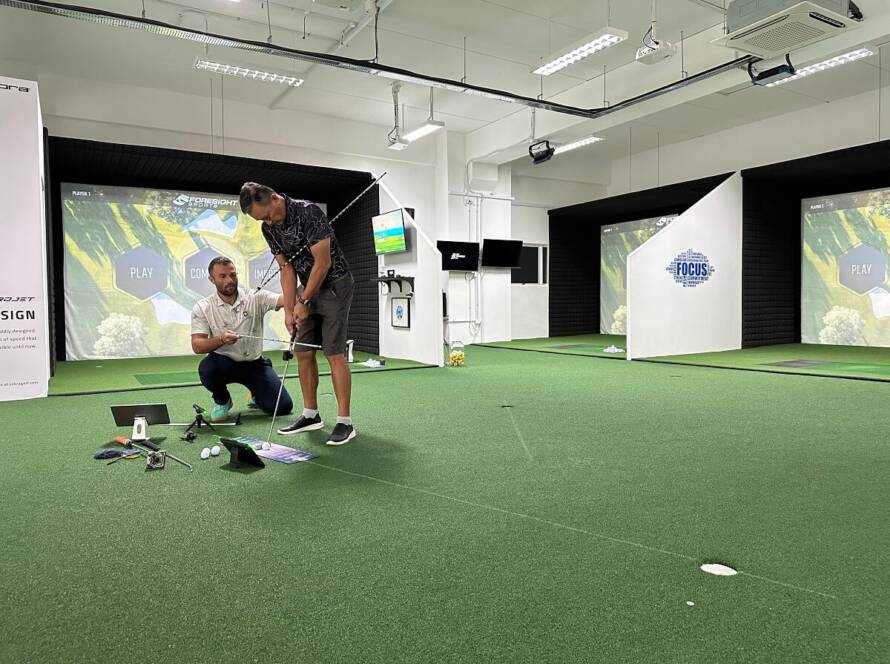
Golf is often perceived as a game of skill, technique, and mental focus. While mastering your swing and reading the course are crucial, physical fitness plays an equally important role in improving performance and preventing injuries in the sport. There is a general myth which says physical training is not needed for the Golf, but there is a common fact that both Physical and mental strengths are correlated.
Why Physical Training Matters in Golf
- Power and Distance
A strong and well-conditioned body allows golfers to generate more clubhead speed, translating to longer drives. Core strength, leg power, and rotational flexibility are key to maximizing distance while maintaining control.
- Stability and Balance
A proper golf swing requires excellent balance and stability. Physical training targeting the lower body, core, and hips helps maintain posture during the swing, improving shot consistency and accuracy.
- Flexibility and Mobility
Flexibility in the shoulders, hips, and spine ensures a full range of motion for the swing. Stretching, yoga, and mobility exercises prevent stiffness, allowing smoother swings and reducing the risk of strain or injury, which can be well understood through golf anatomy
- Endurance and Focus
A round of golf can last 2 – 5 hours, requiring sustained energy and focus. Cardiovascular fitness helps golfers stay alert and maintain proper technique throughout the course.
- Injury Prevention
Even though golf may appear low-impact, repetitive swinging can strain the back, shoulders, and wrists. Strengthening supporting muscles reduces the likelihood of overuse injuries.
Key Areas to Focus On in Golf-Specific Fitness Training
To improve your performance on the course, golfers should focus on some of the Swing strategy during Golf Fitness training :
- Core Strength
- The core is the engine of your swing, helping generate power and maintain posture.
- Exercises: Planks, Russian twists, medicine ball rotations.
- Flexibility & Mobility
- Ensures a full range of motion in the shoulders, hips, spine, and wrists for smooth swings.
- Exercises: Yoga, dynamic stretches, thoracic spine, and hip mobility drills.
- Balance & Stability
- Maintains control during the swing and improves consistency.
- Exercises: Single-leg squats, stability ball exercises, balance board drills.
- Strength (Upper & Lower Body)
- Legs: Provide a solid base for your swing (squats, lunges).
- Upper Body: Helps with swing control and endurance (deadlifts, push-ups, resistance band rows).
- Cardiovascular Endurance
- Sustains energy and focus through long rounds.
- Exercises: Brisk walking, cycling, interval training.
- Power & Explosiveness
- Enhances drive distance without losing control.
- Exercises: Medicine ball throws, kettlebell swings, jump squats.
Where It Helps During Your Golf Game
1. Swing Power & Distance
Strength and explosive training improve clubhead speed and energy transfer.
Benefit: Hit longer, more controlled shots without overexertion.
2. Balance & Stability
Core and lower-body training help maintain posture throughout the swing.
Benefit: Solid contact and fewer mishits under pressure.
3. Endurance & Consistency
Cardio and muscular endurance allow you to stay sharp for 18+ holes.
Benefit: Maintain swing quality through the back nine and tournament rounds.
4. Mobility & Flexibility
Improved hip, shoulder, and spine mobility allows full, unrestricted rotation.
Benefit: Smooth swing mechanics and better range of motion for all shots.
5. Short Game & Putting Control
Stability and fine motor training enhance precision around the greens.
Benefit: Better touch, tempo, and accuracy on chips, pitches, and putts.
6. Injury Prevention
Targeted Golf fitness training reduces strain on joints and muscles during repetitive swings.
Benefit: Stay healthy and perform consistently across long practice and tournament days.
7. Mental Confidence
Being physically prepared boosts focus and reduces tension during play.
Benefit: Trust your body under pressure, leading to better decision-making and execution.
Conclusion
Physical training in golf is no longer optional, it’s essential. By targeting core strength, flexibility, balance, endurance, and power, golfers can improve swing mechanics, increase distance, prevent injuries, and enjoy the game for longer. Whether you are a beginner aiming to learn the basics or an advanced player competing at a high level, a consistent fitness routine tailored for golf will help you reach your full potential on the course.