When it comes to developing a junior golfer, it can be easy to focus on the things we can measure.
How far are they hitting it? What’s their handicap? Are they winning tournaments? How is their swing looking? Are they improving quickly enough?
These are all important questions at the right time. But there is one question that is often overlooked:
Are they actually enjoying themselves?
For junior golfers, having fun shouldn’t be seen as something separate from development. In many cases, it is one of the most important parts of development.
If we want children to succeed in golf, whether that means becoming a professional, playing at university, competing at a high level, or simply becoming a lifelong golfer, we need to make sure they genuinely enjoy the game.
Pressure Doesn’t Create Long-Term Success
Parents naturally want the best for their children. If a child shows talent, it’s understandable that parents want to see that talent develop.
But sometimes, without realising it, that support can turn into pressure.
“Why didn’t you hit that shot better?”
“You were playing so well until that hole.”
“You should be beating these players.”
“You need to practise more.”
“Don’t make that mistake again.”
For an adult, these comments might seem motivating. For a child, they can completely change the way they experience golf.
Instead of seeing golf as a game, they begin to see it as a test.
Every shot becomes something they can get wrong. Every competition becomes something they can fail at. Every bad round becomes a disappointment.
And when children start associating golf with disappointment, criticism or pressure, it’s only natural that they can begin to lose interest.
You cannot force a child to love golf.
But you can create an environment where they want to play.
If You Want Your Child to Succeed, Make Golf Fun
This doesn’t mean that junior golf should be treated like a playground all the time.
Children can still learn discipline. They can still work hard. They can still be challenged. They can still practise their weaknesses.
The difference is how we create that environment.
A child who enjoys their practice is far more likely to want to practise again.
A child who enjoys competing is more likely to want to enter another competition.
A child who enjoys being challenged is more likely to push themselves.
And a child who loves golf will naturally spend more time around the game.
That extra time is incredibly valuable.
Think about it simply:
More enjoyment → more engagement → more practice → more experience → more development.
Rather than constantly telling a child that they need to work harder, we should be asking ourselves:
“How can I make them want to work harder?”
Drills Don’t Have to Be Boring
One of the biggest misconceptions about making golf fun is that it means removing structured practice.
It doesn’t.
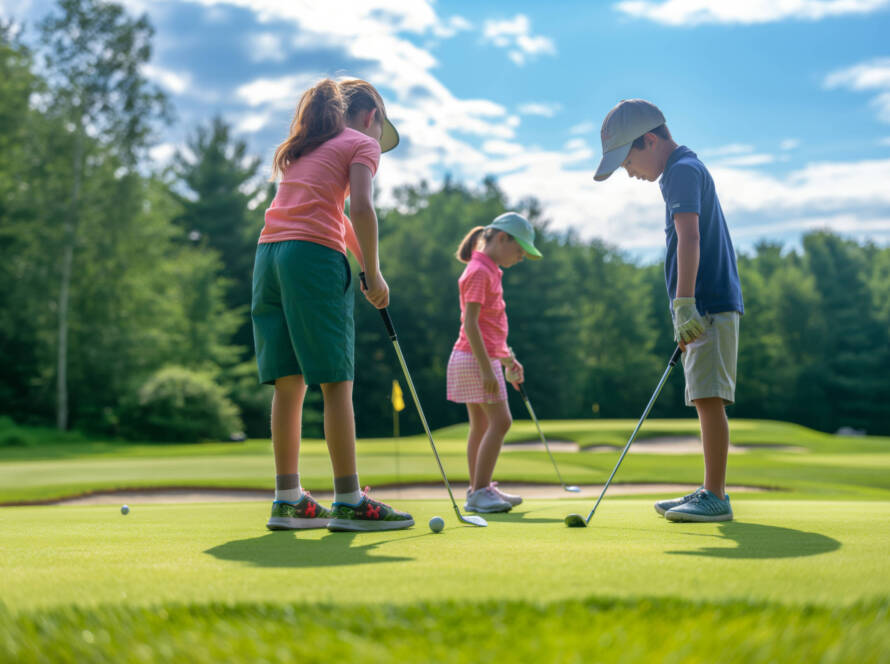
In fact, some of the most effective junior sessions can be built around drills that develop very specific skills but are presented as games.
For example, instead of asking a child to hit 20 shots to the same target, why not create a challenge?
Give them different targets and award points for each one they hit.
Instead of simply practising putting, create a putting competition.
Instead of repeatedly practising bunker shots, create a challenge where they have to get the ball inside a scoring zone.
Instead of telling a child to work on their trajectory, give them a challenge to hit a certain height or finish the ball within a specific area.
The technical objective hasn’t changed. The experience has. And that can make a huge difference.
Another important part of junior golf development is ensuring children have the right equipment for their age and physical development. Using golf clubs that are too long or too heavy can affect their swing, comfort and confidence. Choosing the right junior golf clubs is an important part of helping young golfers develop good habits from the beginning.
Games Can Develop Serious Skills
A good junior golf game isn’t just entertainment.
It can be carefully designed to develop the exact skills a coach wants to improve.
A target game can develop distance control and accuracy.
A putting competition can develop green reading, pace control and pressure management.
A “closest to the pin” challenge can develop shot control and decision-making.
A game where the player has to hit different trajectories can develop face control and strike awareness.
A points-based challenge can introduce competition and consequences.
And playing games against other juniors can teach children how to deal with winning, losing, pressure and decision-making — all while they are enjoying themselves.
This is where good coaching becomes incredibly important.
The drill doesn’t have to look complicated.
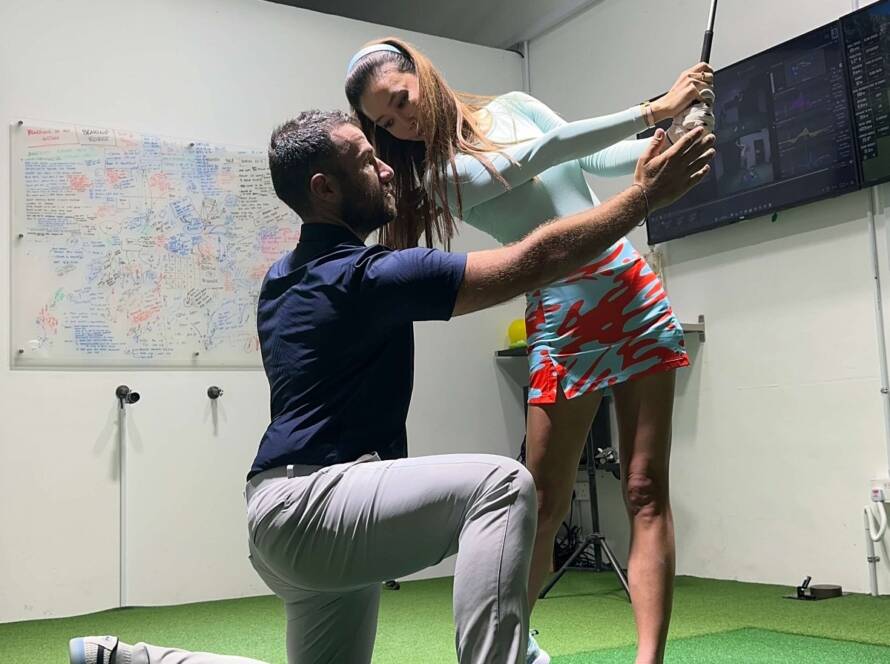
The coach’s job is to understand what skill needs to be developed and then find a fun way of creating an environment where the child can develop it.
Let Them Experiment
Another important part of junior development is giving children permission to experiment.
What happens if they hit the ball really high?
What happens if they try to curve it?
Can they hit a low shot underneath a tree?
Can they make a 20-foot putt?
Can they get their ball closest to the pin?
Can they beat their previous score?
These challenges encourage children to explore what they can do with a golf ball.
And exploration is a huge part of learning.
Sometimes we can become so focused on teaching the “correct” technique that we forget golf is ultimately a game of solving problems.
The best players aren’t simply capable of making a technically perfect swing.
They can adapt.
They can react.
They can create different shots.
They can make decisions.
They can handle pressure.
Fun games can develop all of these qualities.
Let Children Own Their Development
One of the most powerful things we can give a junior golfer is ownership.
Instead of constantly telling them what they did wrong, ask them questions.
“What did you notice about that shot?”
“What do you think you could try differently?”
“Which shot did you enjoy hitting the most?”
“What challenge do you want to try next?”
“What do you think would help you get better at that?”
This encourages the child to think for themselves.
The goal isn’t for the coach or parent to become the person responsible for the child’s golf.
The goal is to help the child become responsible for their own golf.
That is a much more sustainable path to long-term success.
Success Isn’t Always Measured by Scores
Junior golf development isn’t linear.
There will be good rounds and bad rounds.
There will be tournaments where a child plays brilliantly and others where nothing seems to go right.
There will be technical changes that temporarily make their game worse before it gets better.
There will be periods where progress seems slow.
That’s normal.
If a child’s enjoyment is tied entirely to their score, then every bad round becomes a problem.
But if their enjoyment comes from the process, hitting good shots, learning something new, competing with friends, overcoming challenges and seeing improvement, as they have a much stronger foundation.
The score becomes feedback rather than a definition of who they are as a golfer.
The Long Game
If your child is serious about golf, the goal shouldn’t simply be to make them a better 10-year-old, 12-year-old or 14yr old golfer.
The goal should be to help them become the best golfer they can be over the course of their entire development.
That takes time.
A junior golfer who is winning everything at 10 isn’t necessarily going to be the best golfer at 18.
And a child who isn’t winning tournaments today isn’t necessarily going to struggle later.
What matters is whether they continue to develop, continue to learn and perhaps most importantly continue to want to play.
Because the junior golfer who loves practising is going to practise more.
The junior golfer who loves competing is going to compete more.
The junior golfer who enjoys being challenged is going to seek out challenges.
And the junior golfer who genuinely loves golf is far more likely to stick with it when things get difficult.
Fun Isn’t the Opposite of High Performance
This is perhaps the biggest message parents and coaches should take away.
Fun and high performance are not opposites.
You don’t have to choose between making a session enjoyable and making it productive.
You can do both.
A session can be fun while improving technique.
A game can be competitive while developing skills.
A drill can be challenging while still being enjoyable.
A child can work incredibly hard without feeling like they are being pressured.
The best junior coaches understand that fun is not a distraction from development — it is a tool for development.
So the next time your child or junior golfer has a practice session, don’t only ask:
“How much did they improve?”
Ask:
“Did they enjoy it?”
Because if they enjoyed it, there’s a much better chance they’ll come back tomorrow wanting to do it again.
And that is where real development begins.
Let them play. Let them experiment. Let them compete. Let them make mistakes.
Most importantly, let them enjoy the game.
Because if you want a child to succeed in golf, the best thing you can do is give them a reason to love playing
This is why effective Kids Golf Coaching is about more than teaching children how to swing a golf club. It is about creating an enjoyable learning environment where young golfers can build confidence, develop their skills and discover their love for the game. With the right balance of structured practice, fun challenges and encouragement, children can develop a strong foundation for long-term golfing success.