Everyone who admires golf often has a misconception that golf is only played in an outdoor setting. However, many people don’t realise that the golfing journey of every pro player often starts in indoor simulator bays.
Learning golf outdoors can be more complex for beginners, especially when trying to understand ball flight and club path. Indoor golf bays, equipped with simulators and systems like Swing Catalyst, can closely analyse swing behaviour and provide accurate data that helps improve the swing effectively.
Why start at indoor golf training?
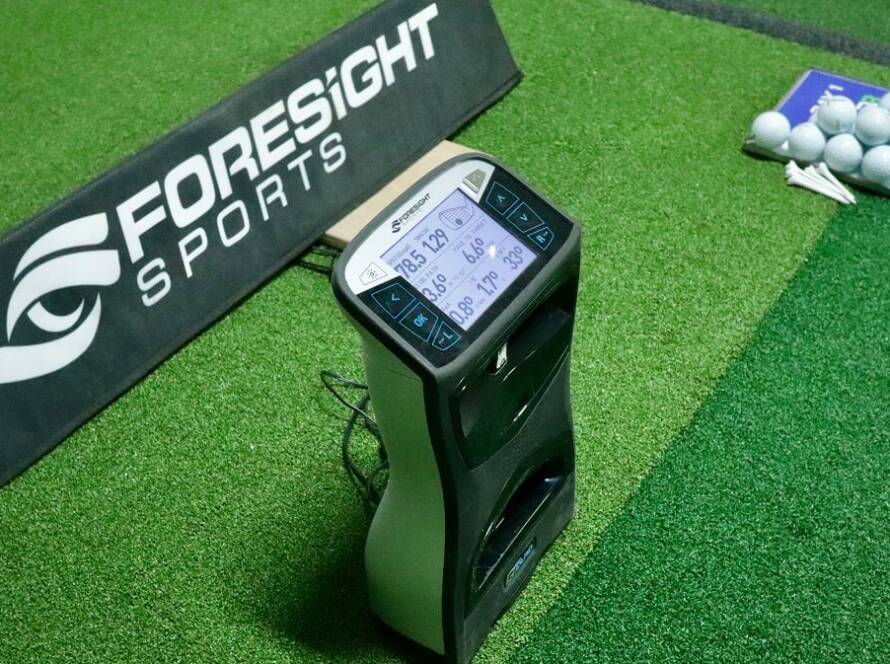
Indoor virtual golf simulators replicate real outdoor playing conditions through projector screens and advanced tracking systems. Technologies like simulators, Swing Catalyst, and G-Quad provide accurate swing data, while high-speed cameras capture swing positions in detail. This allows corrections to be made immediately in a controlled indoor environment.
How does it work?
A player hits golf shots in an indoor simulator bay using real clubs and balls. The sensors and tracking systems capture key data such as:
- swing mechanics Club path
- Face angle
- Ball speed
- Launch angle
- Swing motion (via cameras)
This data is then displayed instantly on the screen, showing the shot outcome and swing analysis. The coach uses this information to identify mistakes and guide corrections step by step.
What to expect after proper indoor training?
After structured indoor training, golfers can expect:
- Better swing consistency
- Improved ball striking
- Clear understanding of
- Reduced common mistakes (slice, hook, topping, etc.)
- Increased confidence before moving outdoors
Most importantly, players develop a repeatable swing pattern backed by data, not guesswork.
What are the advantages compared to Golf On-Course training?
Indoor training has several advantages over Golf on-course training:
- Controlled environment (no weather interruptions)
- Instant swing feedback and data analysis
- Faster correction of mistakes
- More focused repetition practice
- Beginner-friendly learning structure
- No pressure from real course play
On-course training is still valuable, but indoor sessions help build the foundation much faster.
After learning, can we still continue indoor bay practice?
Yes, absolutely. Indoor practice is not just for beginners—it is also used by advanced and professional players.
Even after learning the basics, indoor bays are useful for:
- Maintaining swing consistency
- Fine-tuning technique
- Off-season training
- Fixing specific swing issues
- Regular skill improvement
Many golfers combine both indoor practice and outdoor play for the best results.
At DB Golf Center, we are equipped with five indoor golf simulator bays, including one PuttView system, making it an ideal facility for golfers of all skill levels to practice and improve their game.
We also offer 24/7 access to the golf bays for members who purchase our golf package, allowing you to visit and play at your convenience, including during non-peak hours. During your first visit, our onsite staff will guide you through the opening and closing procedures and provide all the necessary instructions and checklists.
In addition to practice sessions, we also offer professional golf coaching in our indoor simulator bays, which provide access to multiple golf courses from around the world.