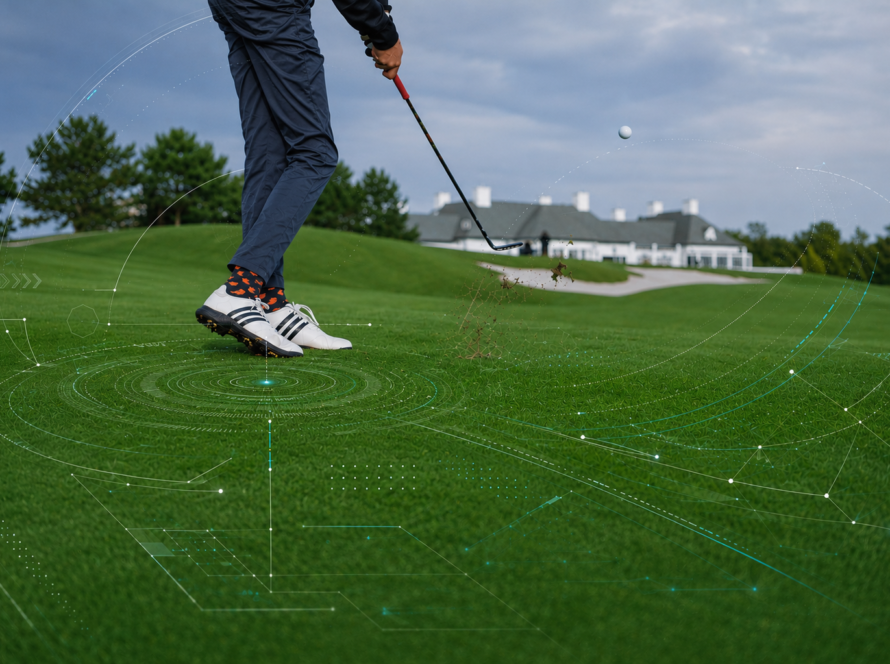
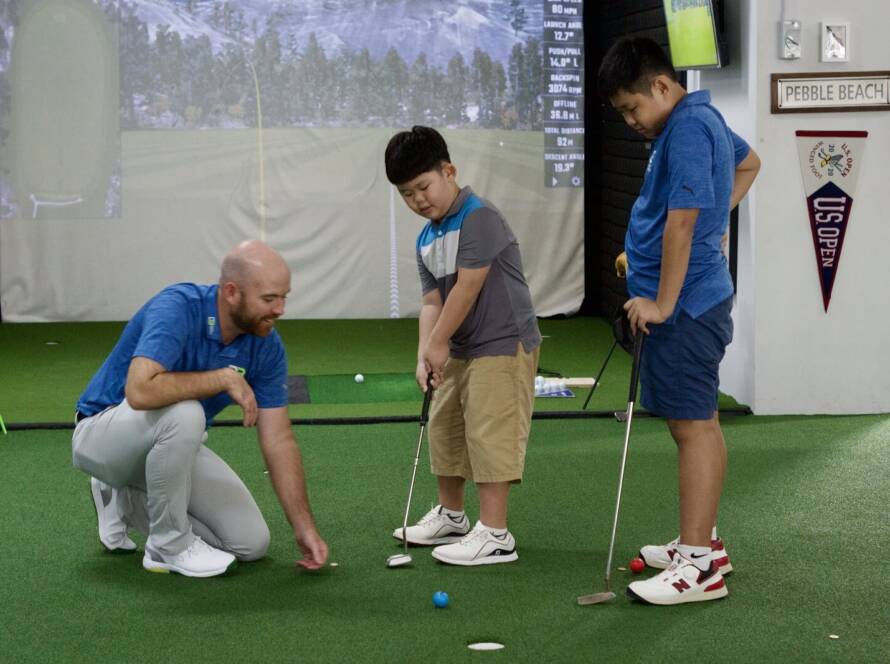
Every takeaway issue I fix with students traces back to the same question: are the shoulders and ribcage moving together, or are they fighting each other? It sounds like a small detail. It’s not. This is one of the key movement patterns we address through golf coaching. It’s the difference between a swing that stays connected and one that comes apart before the club even reaches parallel.
Connected vs. Disconnected: It Starts in the First Foot of the Swing
Picture two golfers starting their backswing. One turns the shoulders and ribcage as a single unit – one solid rotational stretch. The other lets the lead shoulder protract forward early, and the shoulders separate from the ribcage right at the start. From the outside, the difference looks small. In terms of what happens next, it’s everything.
That early separation doesn’t stay contained. It travels straight into the arms, and from there into the club. The arms lose control, and the club moves out of position – before the swing has even really started.
The takeaway isn’t just the first move of the swing. It’s the connection that determines whether everything after it stays on track.
Disconnected Shoulders, Lost Control
Here’s the chain reaction I see over and over:
- Lead shoulder protracts early → shoulders separate from the ribcage
- Early separation → arms lose their connection to the body
- Arms lose control → the club moves out of position
- Club out of position → compensations creep in for the rest of the swing to recover position
Once that separation happens, the arms are on their own. The body can’t recover that connection later – it just manages the damage.
Connected Shoulders, Controlled Club
Flip it around, and the fix is just as direct. Keep the shoulders and ribcage turning together – using the scapula as the link between them – and that connection holds all the way until the shaft reaches parallel to the ground.
Watch any tour-level player and you’ll see it clearly: the upper body moves as one piece through the takeaway, and only once the shaft is parallel does the natural separation begin. That’s not restriction – that’s control. It’s what keeps the club on track for everything that follows.
Your Number One Priority in the Takeaway
The takeaway isn’t just the opening move you rush through to get to the “real” swing – it’s the foundation the rest of the swing is built on. Sequence, position at the top, all secondary if the shoulders and ribcage are already disconnected in the first foot of the swing. This is the basis of the one-piece takeaway strategy, where the body and arms work together from the start of the swing.
So before you worry about anything else in the backswing, check this first: are your shoulders and ribcage moving together, or is one getting ahead of the other?
A Simple Way to Check Yourself
On the range, take your setup and imagine a tennis ball tucked between your shoulder blades. As you start your takeaway, keep that ball in place – maintain the connection between your shoulders and ribcage – all the way until the shaft is parallel to the ground. Only then let the separation begin.
Is your takeaway stable? Check the connection first, every time.