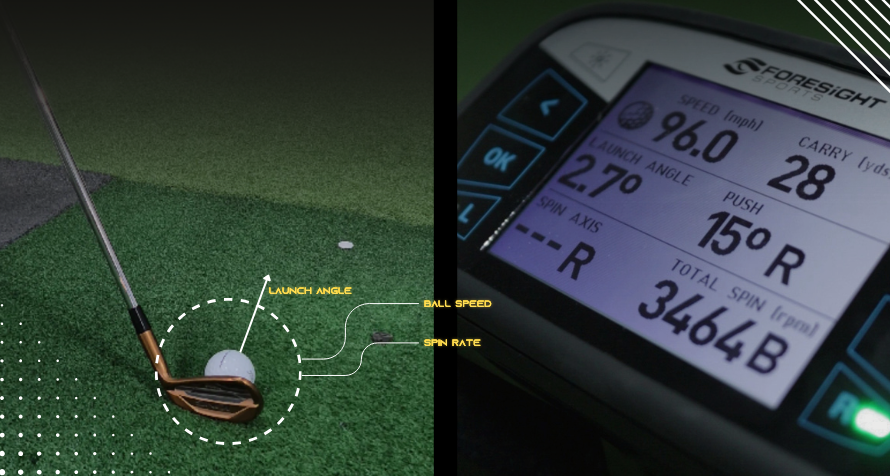
The driver is the only club in the bag designed to be struck with a slightly ascending angle of attack. To achieve this consistently, the ball should be positioned forward in your stance, but there is a point where it can become too far forward.
When the ball is positioned excessively forward, many golfers instinctively make compensations to reach it.
Low point → ball → ascending clubhead.
The ball should sit forward of the low point, allowing the clubhead to ascend through impact.
Understanding where your low point occurs is closely connected to how pressure shifts throughout the swing. Your centre of pressure influences how your body moves and where the club reaches the bottom of its arc.
Too far forward, however, can force compensations that disrupt low point, path, strike and angle of attack. Instead of allowing the clubhead to naturally reach the bottom of its swing arc before travelling upward into impact, the trail shoulder and trail hip begin moving towards the golf ball.
These compensations can create several common faults:
Steeper hand path: The hands work more downward than around the body, resulting in a steeper and less efficient delivery.
Out-to-in club path: The club approaches the ball from outside the target line, increasing the likelihood of pulls, pull-fades and slices. Understanding the relationship between club path, clubface and ball flight can help explain why these swing patterns produce different shot shapes.
High-face strikes: Changes in posture and club delivery can move impact higher on the clubface, creating inconsistent launch conditions and spin.
Negative angle of attack: Instead of delivering the club on a slightly ascending path, the clubhead begins travelling downward through impact, reducing launch, increasing spin and costing valuable distance.
The goal is not to play the ball as far forward as possible, it is to position it where the club can be delivered efficiently without forcing your body to make compensations.
How to Fix It:
1. Position the Ball Forward But Not Excessively:
Forward The ball should be positioned forward enough to allow the clubhead to reach the bottom of its arc before impact and then travel upward through the strike. However, if the ball is so far forward that you feel the need to reach for it or slide your body towards the target, it has likely moved beyond your ideal position.
2. Shift the Pelvis Slightly Towards the Target:
At address, allow the pelvis to be positioned slightly towards the target while maintaining a subtle upper-body tilt away from the target. This setup creates the correct body alignments for an ascending strike and allows you to rotate freely without moving your upper body towards the golf ball.
3. Keep the Lead and Trail Sides Working Together:
Throughout the swing, maintain the relationship between your lead and trail sides. Rather than allowing the trail shoulder and trail hip to move independently towards the golf ball, rotate around your spine and let both sides work together through impact.
This encourages:
A shallower hand path.
A more neutral club path.
More centred contact on the clubface.
A positive angle of attack.
Improved launch conditions and greater consistency
If you consistently struggle with slices, pulls, inconsistent contact, or poor driver launch, your ball position may be worth checking. A golf coaching session can help identify whether ball position, low point, club path, angle of attack or body movement is affecting your shot. At DB Golf Center, our coaches use swing analysis and technology to help identify the cause and improve your consistency.